

The Vital Role of fiber-to-cable Mapping in Offshore Cable Management.

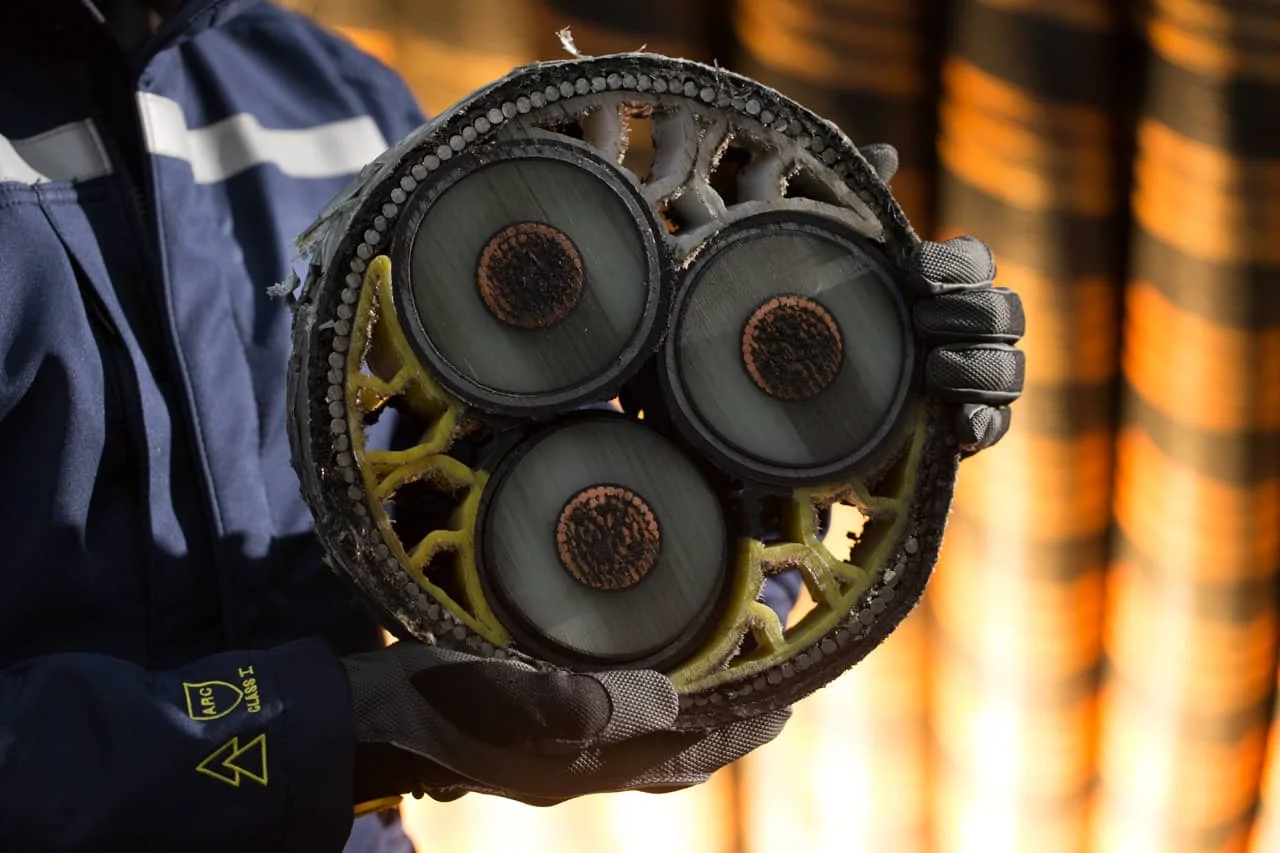
export subsea power cable

At Marlinks, we believe in speaking the language of our users, who rely on the insights derived from our monitoring application to make informed decisions. However, the Distributed Temperature Sensing (DTS) or Distributed Acoustic Sensing (DAS) systems behind our monitoring application speak a different language than the users when referring to specific positions along the submarine cables. To bridge this gap, Marlinks employs spatial fiber-to-cable mapping to seamlessly translate the DTS or DAS measurements into intuitive and comprehensible information for our clients. 

Dual Perspectives: Fiber vs. Cable Coordinates

To grasp the significance of DTS or DAS mapping for submarine cables, it is essential to understand the two sets of coordinates involved:  

  1. Fiber coordinates, the language of the DTS or DAS – Optical fibers are integrated in the submarine electrical cables. These optical fibers are sensitive to temperature variations or acoustic vibrations, a property that the measuring devices exploit to provide real-time data. The DTS or DAS speaks in fiber coordinates, reporting a temperature or vibration profile along the trajectory of this optical fiber, with the starting point typically at the interrogator.

  2. Cable coordinates, the language of the operator – The trajectory of the electrical cable is described by another coordinate system, marked by kilometer points. For instance, the cable’s transition joint bay is designated as KP 0 (Kilometer Point 0).  

Both sets of coordinates describe the same trajectory of the submarine cable, but they are not identical. First, the starting positions differ: the DTS or DAS interrogator is positioned at zero in the fiber coordinate system, while the landfall is typically designated as KP 0 in the cable kilometer point system. Moreover, the length of both systems varies. As the electrical cable enters the offshore substation, the optical fibers are patched through to the DTS or DAS location, adding extra meters to the fiber’s optical path. Additionally, due to the helical winding pattern of the optical fibers inside the submarine cable, their length slightly differs from that of the cable itself.  

Example: Consider a scenario where a fault occurs in a subsea cable. Operators receive an alert from the DTS about a temperature anomaly at specific fiber positions. While this information is invaluable, it does not immediately convey the real-world location of the problem. Operators at the wind farm are accustomed to working with kilometer points and need to know precisely where the issue is occurring along the cable route to take swift action and minimize downtime.  
 

This is where fiber-to-cable mapping as a service steps in

Bridging the gap between these two coordinate systems by mapping the fiber coordinates onto the kilometer points of the electrical cable. At Marlinks, our experts combine information on the fiber optic wiring, as-built data of the installed cable, and the temperature or vibration traces from the DTS or DAS. This comprehensive approach allows us to map the fiber coordinates to the kilometer points effectively. 

Geographical mapping

We take it a step further by incorporating the geographical coordinates of the cable route into the mix. This creates a seamless system that not only identifies anomalies but also pinpoints their exact location on a map. When a problem is detected, operators can quickly consult this map, enabling them to see precisely where, in geographical terms, the issue is located. This empowers them to make informed and efficient decisions, whether it involves dispatching a maintenance crew or rerouting power. 

Conclusion

Distributed Temperature Sensing (DTS) or Distributed Acoustic Sensing (DAS) mapping is the key to ensuring that our clients can easily interpret and act upon the valuable data generated by the measuring devices. It ensures that the devices communicates to the user in the language the user is accustomed to. 

Learn more about subsea cable monitoring.

Get in touch via sales@marlinks.com and we make sure that you get the right information to learn more about subsea cable monitoring with our fiber optic sensing technology.

Highlighted news

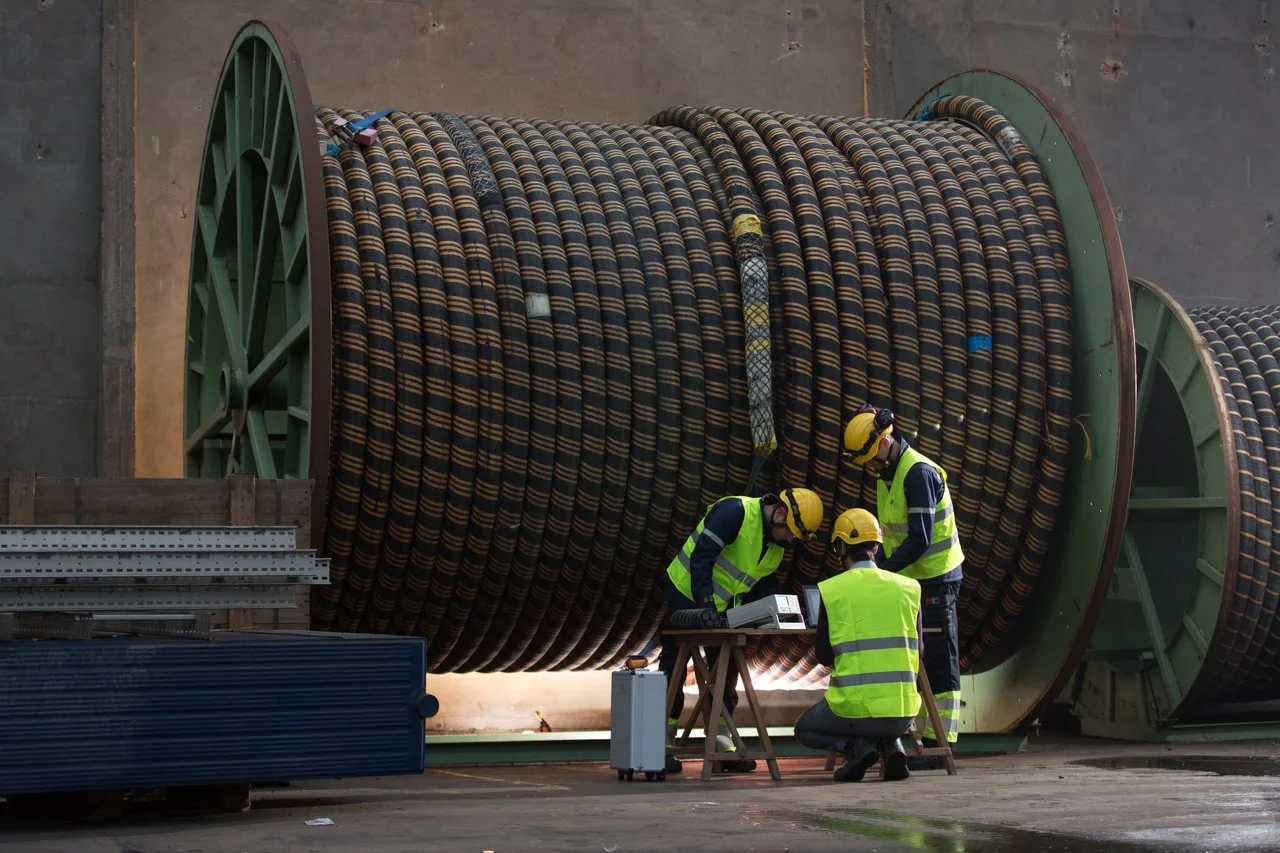
three people monitor subsea power cable on big reel with fiber optic technology

The Crucial Role of Marlinks’ Thermal Models for Subsea Power Cables

In the offshore wind energy sector, subsea power cables play a crucial role in efficiently transmitting electricity from offshore turbines to the shore. At Marlinks, ...
Read More
Diana nato logo

dotOcean and Marlinks Collaborate in NATO’s DIANA Initiative

A joint proposal submitted by dotOcean and its sister company Marlinks on the topic of ‘persistent surveillance above and under water’ has been chosen to ...
Read More
cable protection systems (cps)

Localize and Monitor Unstable Cable Protection Systems

Cable Protection Systems (CPS) play a vital role in offshore wind farms by safeguarding the network of subsea power cables that transport generated electricity to ...
Read More
subsea or submarine power cables

Why Submarine Cable Monitoring Matters to Insurers

As the need for renewable energy sources increases, so do damage claims of offshore wind farms. Facing the brunt such claims, insurance companies are turning ...
Read More
offshore wind farm with substation

Termination Temperature Monitoring (TTM) with FBG’s on Cable Joints and Ends in Offshore Wind Farms

TTM with FBGs involves embedding FBG-sensor lines onto the termination connectors, allowing real-time monitoring of temperature changes. By continuously measuring temperature variations, operators can gather ...
Read More
Scroll to Top